 silicone@silic0ne.com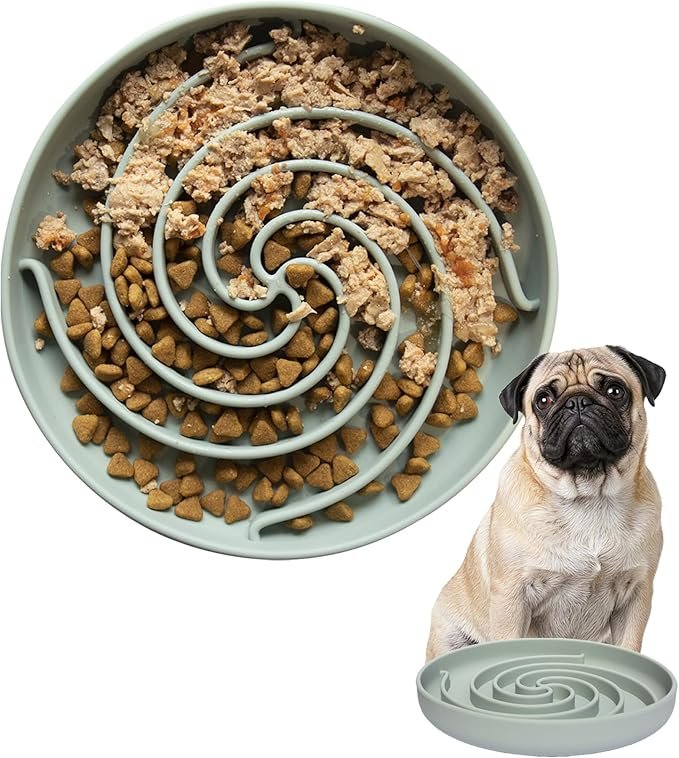
You know the scene. You fill your dog’s bowl with food, turn around to put the bag away, and by the time you look back – gulp – it’s gone. In less than thirty seconds, your furry friend has inhaled an entire cup of kibble without chewing, without breathing, and certainly without tasting. Then comes the dreaded aftermath: burping, gagging, bloating, or worse, vomiting undigested food onto your rug.
If this sounds familiar, you’re not alone. Thousands of dog owners struggle with “speed eaters” – dogs who treat every meal like a competitive eating contest. But here’s the truth: fast eating isn’t just messy or annoying. It’s genuinely dangerous. From bloat (gastric dilatation‑volvulus) to choking to chronic indigestion, rapid consumption poses real health risks.
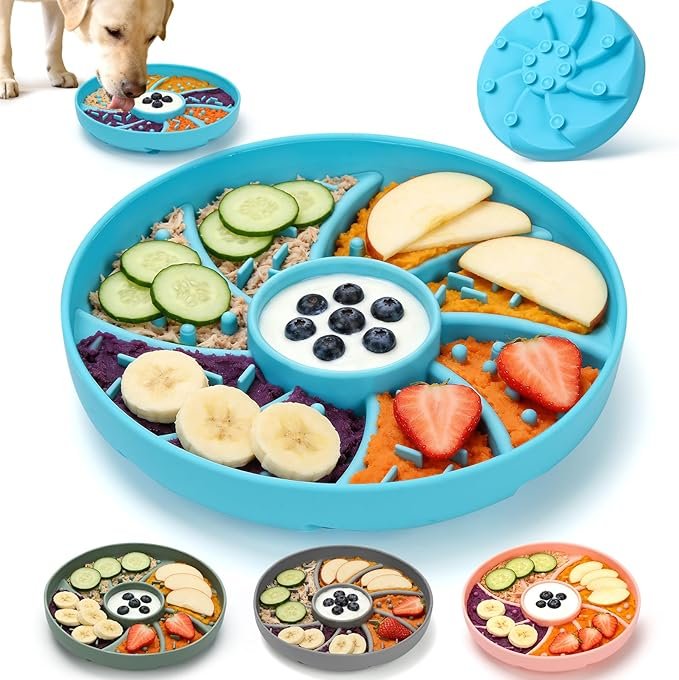
Enter the Bifeaw Slow Feeder Dog Bowl – a thoughtfully designed, 7.5‑inch silicone puzzle bowl that transforms mealtime from a 30‑second inhale into a 10‑minute, brain‑engaging, digestion‑friendly experience. In a soft, modern grey‑green color, this bowl isn’t just functional; it’s a statement that you care about your dog’s health, happiness, and safety.
Let’s dive into why this particular slow feeder stands out from the crowd, how it protects your pup, and why the grey‑green silicone bowl might just be the best investment you’ll make for your four‑legged family member.
🐕 The Ideal Size: Perfect for Small to Medium Dogs (and Even Some Large Breeds)

One of the biggest frustrations with slow feeder bowls is size. Many are either tiny (designed for teacup breeds) or massive (made for Great Danes). The Bifeaw slow feeder strikes a beautiful middle ground: 7.5 inches in diameter and 1.2 inches deep.
Why does this matter? Because it holds 1 to 2 cups of food – the perfect portion for most small, medium, and even some larger breeds, depending on their diet. Whether you feed dry kibble, wet food, fresh cooked meals, or a mix, the bowl accommodates it all. The shallow depth (1.2 inches) ensures that even short‑snouted dogs – think Pugs, French Bulldogs, or Boston Terriers – can reach the bottom without straining their necks or smooshing their faces into the bowl.
The 7.5‑inch width is generous enough to spread out the food, forcing the dog to move around the puzzle, but compact enough to fit inside most standard feeding stations, crates, or travel bags. And because it’s silicone, it’s lightweight and flexible – you can even fold it slightly (though not recommended for regular use) to pack for trips to the vet, the cabin, or grandma’s house.
Which dogs benefit most?
- Fast eaters of all breeds – Labs, Beagles, Boxers, and any dog that acts like it’s starving.
- Small breeds with dental issues – The puzzle slows them down, reducing jaw strain.
- Puppies – Teaches mindful eating from an early age.
- Senior dogs – Gentle on aging teeth and gums; soft silicone won’t hurt sensitive mouths.
- Dogs recovering from surgery – Controlled eating reduces risk of vomiting or straining sutures.
The size is also ideal for measuring portions. If your vet recommends 1.5 cups per meal, you can fill the bowl to near capacity and know you’re not over‑ or under‑feeding. No more guessing.
🐾 Slow Down, Savor Every Bite: Digestive Health Starts Here

Let’s get into the science – because this isn’t just about making mealtime last longer. It’s about preventing serious health issues.
When a dog eats too quickly, several things happen simultaneously:
- They swallow large amounts of air (aerophagia), which expands the stomach. This causes discomfort, burping, flatulence, and in severe cases, a condition called Gastric Dilatation‑Volvulus (GDV) – commonly known as bloat. GDV is life‑threatening and requires emergency surgery. Deep‑chested breeds like Great Danes, German Shepherds, and Standard Poodles are especially at risk.
- Food isn’t chewed – Dogs have fewer chewing teeth than humans, but they still need to break down kibble. Swallowing whole pieces means the stomach has to work overtime, leading to indigestion, regurgitation, or vomiting.
- Nutrient absorption suffers – When food passes too quickly through the digestive tract, the body doesn’t have time to extract all the vitamins, minerals, and proteins. You’re paying for high‑quality food, but your dog isn’t reaping the full benefits.
- Obesity risk increases – Fast eaters often don’t register fullness until after they’ve overeaten. Slowing down gives the brain time to receive satiety signals.
The Bifeaw slow feeder bowl addresses all of this with a strategic puzzle design. The interior is not a smooth, open basin. Instead, it features a series of raised bumps, curves, and obstacles that force the dog to navigate around them to reach each piece of kibble or bit of wet food. Instead of vacuuming up food in a straight line, the dog has to tilt its head, use its tongue, and work its way through the maze.
The result? Mealtime extends from 30 seconds to 5‑10 minutes (depending on the dog’s determination). That slower pace significantly reduces air intake, encourages at least some chewing, and gives the stomach a fighting chance to process food properly. Owners who switch to this bowl consistently report fewer incidents of vomiting, less gas, and more relaxed post‑meal behavior.
Real‑world example: A two‑year‑old Labrador Retriever named Charlie used to eat his 2 cups of kibble in under 40 seconds, then immediately vomit on the living room rug. After switching to the Bifeaw slow feeder, Charlie’s mealtime stretched to 8 minutes, and the vomiting stopped completely. His owner also noticed he was less lethargic after meals. That’s the power of slowing down.
🧠 Mental Stimulation for Your Dog: Turning Mealtime into Brain Games

Dogs need mental exercise just as much as physical exercise. A bored dog is a destructive dog – chewing shoes, digging up gardens, barking at shadows. But you can’t spend every waking hour playing fetch or practicing tricks. That’s where the puzzle aspect of this slow feeder becomes a secret weapon.
The same obstacles that slow down eating also engage your dog’s brain. They have to figure out how to get the food from between the bumps, how to angle their snout, and which direction to work the puzzle. It’s a low‑stakes, high‑reward problem that releases dopamine and provides a sense of accomplishment.
For anxious or high‑strung dogs, the bowl can double as a lick mat. Spread a thin layer of wet food, peanut butter (xylitol‑free, of course), plain yogurt, or mashed banana onto the surface of the puzzle. The dog will spend 10‑15 minutes licking every crevice clean. Licking is a natural self‑soothing behavior for dogs; it lowers cortisol (stress hormone) and releases endorphins. Veterinarians often recommend lick mats for dogs with separation anxiety, noise phobias (fireworks, thunderstorms), or post‑surgical restlessness.
So whether you use it as a slow feeder for dry kibble or a calming lick mat for wet treats, this bowl pulls double duty. It’s both a digestive aid and a mental enrichment tool. For the price of a single bowl, you’re getting two valuable interventions.
Bonus tip: Freeze the bowl after spreading wet food or broth. On a hot summer day, give your dog the frozen puzzle – it becomes a long‑lasting, cooling, interactive popsicle that occupies them for 30+ minutes. The silicone material handles freezing without cracking.
✅ Safety First: BPA‑Free, Phthalate‑Free, and Built to Last

Pet products have a shameful history of containing harmful chemicals. Cheap plastic bowls can leach BPA (bisphenol A) and phthalates – endocrine disruptors linked to reproductive issues, cancer, and developmental problems in animals. Stainless steel is safe but noisy and doesn’t have puzzle features. Ceramic can chip, and bacteria can grow in the cracks.
The Bifeaw slow feeder bowl is made from high‑quality, food‑grade silicone – the gold standard for safety and durability. Here’s what that means:
- No plastics – Zero petroleum‑based materials.
- BPA‑free – No bisphenol A or similar compounds.
- Phthalate‑free – No softening agents that mimic hormones.
- Non‑toxic – Even if your dog chews on the bowl (and some determined pups might), they won’t ingest harmful residues.
- Odorless and tasteless – Silicone doesn’t impart any weird smell or flavor to food, even when microwaved or frozen.
Silicone is also naturally non‑porous, meaning bacteria, mold, and mildew cannot take up residence. Stainless steel is also non‑porous, but it doesn’t offer the puzzle design. Plastic bowls, even those labeled “antibacterial,” develop microscopic scratches over time that harbor pathogens. Silicone’s smooth, flexible surface resists scratching.
For puppies, senior dogs, or dogs with compromised immune systems, this level of hygiene is critical. You wouldn’t eat off a cracked, scratched plate – why ask your dog to do the same?
🧼 Easy to Clean: Because You Have Better Things to Do

Let’s be real: dog bowls get gross. Kibble dust, wet food residue, saliva, and grease accumulate quickly. If cleaning requires scrubbing with a toothbrush for ten minutes, you’re going to avoid doing it. And dirty bowls grow bacteria that can make your dog sick.
The Bifeaw slow feeder is designed for effortless cleaning. Here’s how:
Smooth surfaces – Despite the puzzle obstacles, the silicone surface is silky‑smooth. Food residue doesn’t cling; it rinses right off. Even sticky peanut butter or canned food releases easily.
Dishwasher safe – Toss it on the top rack of your dishwasher (or bottom, if it fits). The silicone withstands high heat and detergents without warping or degrading. Run it through with your regular dishes, and it comes out sanitized and ready to use.
Hand washing is just as easy – Rinse under warm water, add a drop of dish soap, wipe with a sponge or your fingers (the soft silicone is safe for bare hands), then rinse again. That’s it. No scrubbing hard‑to‑reach corners – the puzzle is open and accessible.
Grease and residue resistance – The product description notes that food residue and grease have a hard time accumulating. That’s because silicone has low surface energy. Think of a non‑stick baking mat – same principle. A quick rinse after each meal prevents any buildup.
Microwave and freezer safe – If you do freeze the bowl with food inside, thaw it slightly, then pop it in the microwave for a few seconds to loosen. The silicone won’t melt or warp. For wet food that has dried on, add a splash of water and microwave for 10 seconds – it’ll wipe clean instantly.
Compared to plastic slow feeders, which often have deep, narrow crevices that trap food and require a bottle brush, the Bifeaw design is a dream. Compared to ceramic or metal? They don’t even offer puzzle features. This bowl combines the best of both worlds: effective slowing + easy maintenance.
🛑 Non‑Slip Design: No More “Bowling” Across the Floor

One of the most annoying things about feeding a fast eater is that they often push the bowl across the floor. The bowl slides, spills food, and the dog chases after it – sometimes eating even faster because they’re anxious the food will escape.
The Bifeaw slow feeder bowl features a non‑slip base (integral to the silicone design – the entire bowl is grippy). Silicone naturally has a high coefficient of friction, especially on smooth surfaces like tile, hardwood, or laminate. When you place this bowl on the floor, it stays put. No sliding, no spinning, no chasing.
This is especially important for dogs who eat in a hurry. A stable bowl allows them to focus on navigating the puzzle, not on chasing their dinner across the kitchen. It also protects your floors – no more scratches from ceramic bowls sliding around.
For owners with elderly dogs or dogs with mobility issues (arthritis, hip dysplasia), a non‑slip bowl is essential. The dog doesn’t have to strain or adjust position as the bowl moves. Mealtime becomes comfortable and stress‑free.
🌈 The Grey‑Green Aesthetic: Blends with Any Home
Let’s not ignore the visual aspect. Most dog bowls are eyesores – neon colors, cartoon prints, or clinical stainless steel. The Bifeaw slow feeder comes in a muted, natural grey‑green shade that looks at home in any kitchen, mudroom, or modern living space. It’s subtle, sophisticated, and doesn’t scream “pet product.”
The color also hides minor stains well (though thorough cleaning is still recommended). And because it’s a solid color rather than a pattern, it’s easy to spot any leftover food debris.
If you’re someone who cares about home aesthetics – even the corner where your dog eats – this bowl delivers.
🐶 How to Transition Your Dog to a Slow Feeder Bowl
Some dogs take to a puzzle bowl immediately, treating it like a fun game. Others may get frustrated. Here’s how to make the switch smooth:
- Start with familiar food – Use the same kibble or wet food they love. Don’t change diet and bowl at the same time.
- Don’t overfill – For the first few meals, put in just ½ cup. Let them get used to the puzzle without being overwhelmed.
- Guide them – If your dog seems confused, use your finger to point at food trapped between bumps. Some dogs need a demonstration.
- Praise and patience – When they successfully extract a piece, say “good boy/girl!” Positive reinforcement works wonders.
- If frustration occurs (barking, pawing aggressively), remove the bowl, feed a small amount in a regular bowl to calm them, then reintroduce the slow feeder with higher‑value food (a few treats mixed in).
- Never leave them unsupervised with a silicone bowl if they are aggressive chewers – while silicone is durable, a determined power‑chewer might damage it. Most dogs won’t, but know your dog.
Within a few meals, almost all dogs learn to love the challenge. In fact, many become excited when they see the slow feeder come out – they know mealtime is now also playtime.
📊 Comparison: Bifeaw Silicone Slow Feeder vs. Alternatives
| Feature | Bifeaw Silicone | Hard Plastic Slow Feeder | Stainless Steel Bowl | Ceramic Bowl |
|---|---|---|---|---|
| Slows eating | Yes (puzzle) | Yes | No | No |
| Material safety | BPA/phthalate‑free | Often contains BPA | Safe | Safe but can chip |
| Noise | Silent | Rattles (dog nails) | Loud | Moderate |
| Non‑slip | Excellent (silicone) | Poor (add‑on pads needed) | Poor | Poor |
| Dishwasher safe | Yes | Usually yes | Yes | Yes |
| Microwave safe | Yes | No | No | Sometimes |
| Freezer safe | Yes | No | No | No (cracks) |
| Easy to clean | Very (smooth) | Moderate (crevices) | Easy | Easy but heavy |
| Weight | Lightweight | Light | Heavy | Very heavy |
| Dog can chew on it | Resists mild chewing | Cracks | N/A (hard) | N/A (chips teeth) |
| Aesthetic | Soft grey‑green | Often ugly colors | Industrial | Varies |
The Bifeaw wins on safety, convenience, and versatility – hands down.
🌟 Who Needs This Bowl?
- Owners of fast‑eating dogs – If your dog finishes meals in under a minute, you need this.
- Breeds prone to bloat – Great Danes, Boxers, Weimaraners, Standard Poodles, German Shepherds.
- Dogs with digestive issues – Chronic gas, vomiting, or loose stools after eating.
- Puppy owners – Establish slow eating habits early before bad habits form.
- Anxious or high‑energy dogs – The mental stimulation tires them out gently.
- Multi‑dog households – Slow feeders prevent resource guarding and competitive gulping.
- Travelers – Lightweight, flexible, and easy to pack for trips to the vet, boarding, or road trips.
- Eco‑conscious owners – Silicone is reusable for years, unlike disposable plastic liners.
💡 Pro Tips for Maximum Benefit
- Use for all meals – Consistency is key. Don’t use a regular bowl for breakfast and the slow feeder for dinner. Dogs learn fast; stick with the puzzle.
- Combine with a raised stand if needed – For tall dogs or those with neck issues, place the silicone bowl into a raised feeder stand. The non‑slip base will keep it secure.
- Add a little water or broth – Moistening kibble makes it stick slightly to the puzzle, slowing the dog down even more.
- Rotate with other enrichment – Use the bowl for breakfast and a snuffle mat for dinner. Variety prevents boredom.
- Inspect regularly – While durable, check for any tears or loose pieces, especially if your dog is a chewer. Replace if damaged.
✅ Final Verdict: A Small Change with Life‑Saving Potential
The Bifeaw Slow Feeder Dog Bowl in Grey‑Green is not a luxury – it’s a health necessity for many dogs. For less than the cost of a bag of premium kibble, you can reduce the risk of bloat, improve digestion, provide daily mental enrichment, and clean up less vomit. That’s a staggering return on investment.
The 7.5‑inch size fits most dogs, the silicone construction is safer than plastic, and the dishwasher‑safe, microwave‑safe, freezer‑safe versatility is unmatched. Plus, the non‑slip design means no more chasing bowls across the kitchen floor.
Your dog deserves to enjoy every bite, not inhale it in panic. Your floors deserve a break from regurgitated kibble. And you deserve the peace of mind that comes with knowing mealtime is healthy, happy, and hazard‑free.
So go ahead – retire that old plastic bowl. Make the switch to the Bifeaw slow feeder. Watch your dog slow down, savor, and smile. Because a slower meal isn’t just a longer meal – it’s a safer, smarter, and sweeter one.
sher safe for easy cleaning Easy to Clean: Cleaning silicone slow feeder dog bowls is simple; you can either rinse them with water or put them in the dishwasher. Their smooth surfaces make it difficult for food residue and greaand qrease to accumulate, which sianifcantly lessens the cleaning load on pet owners and ensures that their pets are fed sanitary and clean food